

Composite bonding: cost, how long it lasts and what to expect
Composite bonding costs from £250 a tooth at our Ashton-under-Lyne practice. How it works, how long it lasts, aftercare, and how it compares with veneers.
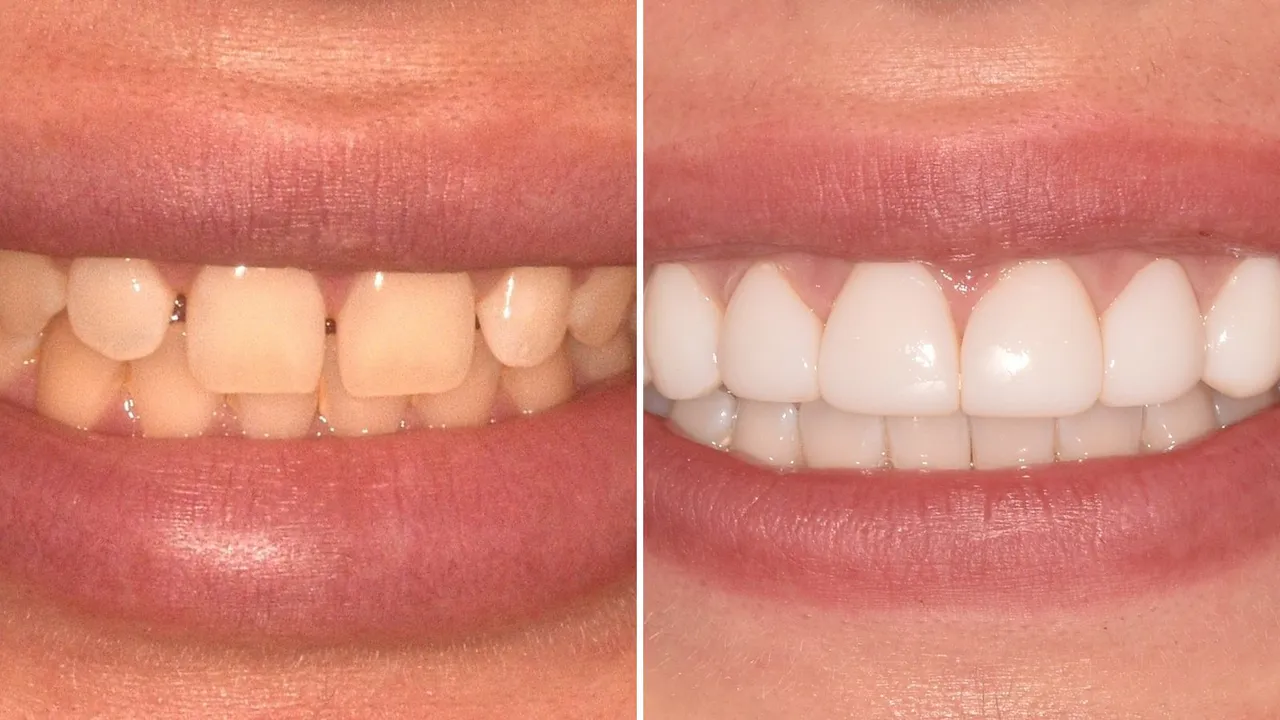
Composite bonding is a tooth-coloured resin that is sculpted onto a tooth and set hard with a light, to repair chips, close small gaps and even out uneven edges. At Radiant Dental in Ashton-under-Lyne it costs from £250 a tooth for edge bonding and from £300 a tooth for composite veneers. It is usually done in one visit, often with no drilling or numbing, and typically lasts 4 to 7 years with good care.
That is the short version. This guide is for anyone thinking about bonding, wherever you are in the UK, and it spells out the prices, timings and policies that apply here at Radiant Dental where they matter.
Composite bonding at a glance
| Composite bonding | |
|---|---|
| Cost at Radiant Dental | From £250 per tooth (edge bonding) or £300 per tooth (composite veneers) |
| Appointments | Usually a single visit |
| Drilling and numbing | Little or no drilling; most cases need no numbing |
| Typical lifespan | 4 to 7 years with good care |
| Can it be whitened? | No. Whiten first, then bond |
| Finance | 0% APR over 12 to 60 months, subject to status |
| First step | New patient exam, £65, with X-rays and a written treatment plan |
What is composite bonding?
Composite is the same family of material used for white fillings: a plastic resin mixed with very fine glass or ceramic particles. For bonding, your dentist conditions the surface of the tooth so the resin can grip it, then builds the new shape up in thin layers. Each layer is hardened with a blue curing light before the next goes on, and the whole thing is shaped by hand and polished.
Two things follow from that.
It is sculpted, not fitted. There is no lab and no ready-made shell. The shape, length and symmetry come from the dentist’s eye and hand, which is why two practices can offer “bonding” and produce very different results.
It adds material rather than removing it. That is what makes it the gentlest way to change a tooth, and also why it has limits. Bonding can make a tooth longer, wider or more even. It cannot make a tooth smaller, and it cannot move one.
You will see two terms used, sometimes interchangeably:
- Edge bonding rebuilds or reshapes the biting edge or a corner of a tooth. It is what you want for a chip, a worn edge or one tooth that sits shorter than its neighbours.
- Composite veneers cover the visible front surface of the tooth, changing its shape, length and shade together. They suit gaps, stubborn staining and teeth that are small or misshapen.
We price the two separately, because they take different amounts of work.
What can composite bonding fix?
- Chipped or worn tooth edges
- Small gaps between teeth, including a gap between the front two
- Teeth that are short, small or peg-shaped
- Uneven length across the front teeth
- Discolouration on individual teeth that whitening has not shifted
- Slightly rotated or tilted teeth, where the aim is to improve how they look rather than move them
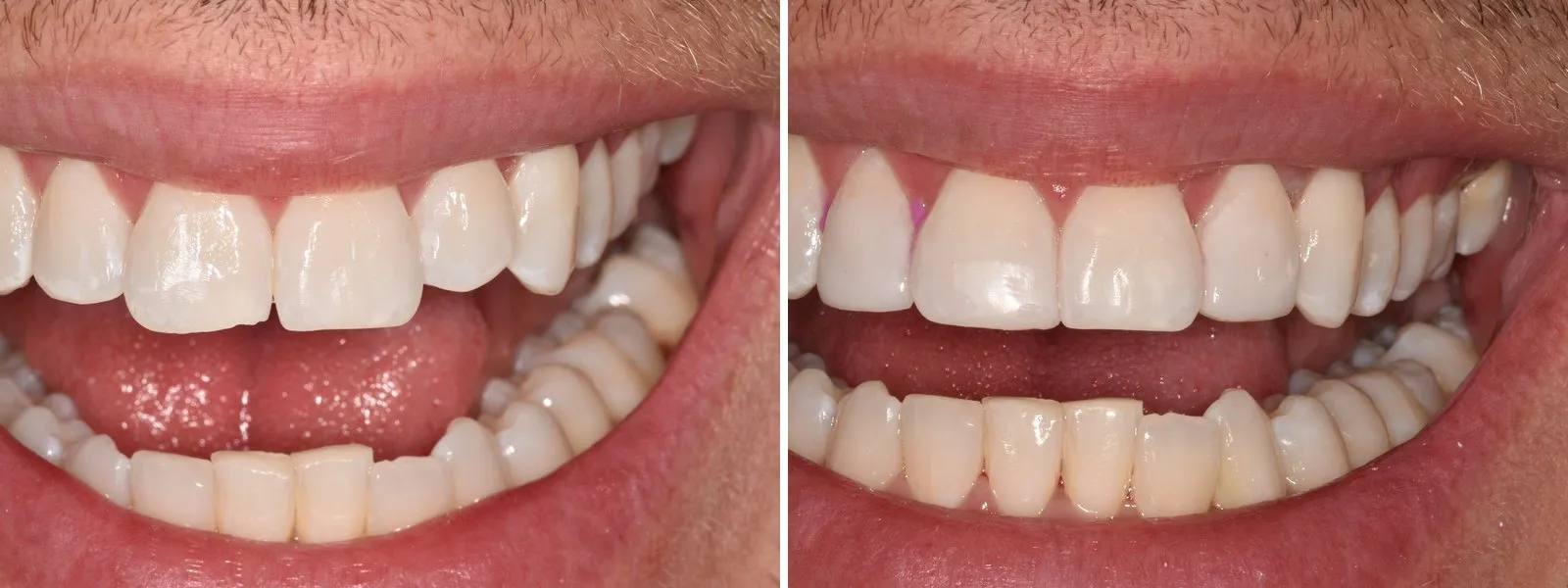
Composite edge bonding at Radiant Dental: before (left) and after (right). Photographs shared with the patient’s consent. Individual results vary.
Bonding is a good fit when the problem is the shape or surface of a tooth. It is a poor fit when the real problem is where the tooth sits, which is covered in the section on who it is not right for below.
How much does composite bonding cost in Ashton-under-Lyne?
At Radiant Dental, edge bonding is from £250 per tooth and composite veneers are from £300 per tooth. Most people treat the 8 to 10 front teeth, so a full set of eight front teeth costs from £2,000 as edge bonding or from £2,400 as composite veneers. Your exact price is agreed in writing at your consultation, before anything starts.
| Teeth treated | Edge bonding (from £250 a tooth) | Composite veneers (from £300 a tooth) |
|---|---|---|
| 1 | £250 | £300 |
| 2 | £500 | £600 |
| 4 | £1,000 | £1,200 |
| 6 | £1,500 | £1,800 |
| 8 | £2,000 | £2,400 |
| 10 | £2,500 | £3,000 |
Spreading the cost. 0% APR finance is available through Chrysalis over 12 to 60 months, subject to status. As an example, £2,400 over 60 months at 0% APR is 60 payments of £40.00. Our full price list, including the cost of whitening and hygiene visits, is on the fees page.
What moves the price:
- How many teeth you treat. The price is per tooth, so you can start with the one or two that bother you most.
- How much each tooth needs. Rebuilding a chipped corner is less work than covering a whole tooth surface.
- What needs doing first. Decay or gum problems come before cosmetic work, and whitening, if you want it, comes before bonding. Professional whitening here is £330.
When you compare quotes, compare like with like. Ask whether the price is per tooth or for the whole smile, whether a review appointment and polish are included, what a repair costs if you chip it, and what any guarantee does and does not cover. The General Dental Council has said patients should understand the risks, limitations, alternatives and ongoing upkeep of bonding before they agree. A low headline price that leaves those out is not a bargain.
How is composite bonding done?
For most cases it is one appointment, from shade match to final polish. The length depends on how many teeth you are having done and how much shaping each needs, and we will tell you at the consultation.
- Consultation and planning. We examine your teeth, gums and bite, take X-rays and photographs, and talk through what you want to change. We plan the shape and shade using digital scanning and smile design, so you know what to expect before we start.
- Whitening, if you want it. Done beforehand, because the bonding cannot be whitened afterwards. More on this below.
- Choosing the shade. We match the composite to your surrounding teeth so the bonded teeth blend in.
- Preparing the surface. The tooth is gently conditioned so the resin grips. There is usually no drilling and no numbing, and no healthy enamel is removed.
- Building and shaping. The resin goes on in layers, each set with the curing light, and is sculpted by hand until the length, shape and symmetry are right.
- Polish and bite check. We finish with a high polish, check that your teeth meet properly, and explain how to look after the result.
Does composite bonding hurt or damage your teeth?
It rarely hurts. Because the work sits on the surface and usually involves little or no drilling, most people need no numbing. If a tooth is sensitive, or you are anxious, we can numb it first. We are a practice built around nervous patients, and you can read how that works on our nervous patients page.
It is gentle on the tooth, but it is not risk-free. Compared with porcelain veneers, which need a layer of enamel removed permanently, bonding takes away little or nothing. The General Dental Council’s guidance for the profession, though, lists the things that can go wrong with composite: staining, loss of shine, wear, chipping, a bond that lets go, and problems if there is too little enamel to bond to, if you grind your teeth, or if gum disease or your bite has not been assessed first.
One more point of honesty. Bonding is often called “reversible”. It is easier to adjust, repair and replace than porcelain. But taking it off completely without touching the enamel underneath is difficult, and the GDC warns specifically against describing bonding as simple or reversible. We would rather say so now than after you have booked.
How long does composite bonding last?
Composite bonding typically lasts 4 to 7 years with good care. Some lasts longer and some needs a repair sooner. When it reaches the end of its life it is polished, repaired or replaced, usually without a new round of treatment on the tooth underneath.
What shortens its life:
- Grinding or clenching. The most common cause of chipping. A night guard is usually advised if you grind.
- Biting hard things. Fingernails, pen lids, ice and hard sweets all chip composite.
- Staining drinks and smoking. Composite is more porous than enamel, so coffee, tea, red wine and tobacco discolour it faster.
- Skipped hygiene visits. Plaque around the margins of bonding can lead to decay or gum problems, and regular polishing keeps the surface smooth.
- Heavy bite forces. Teeth that take a lot of load wear bonding faster.
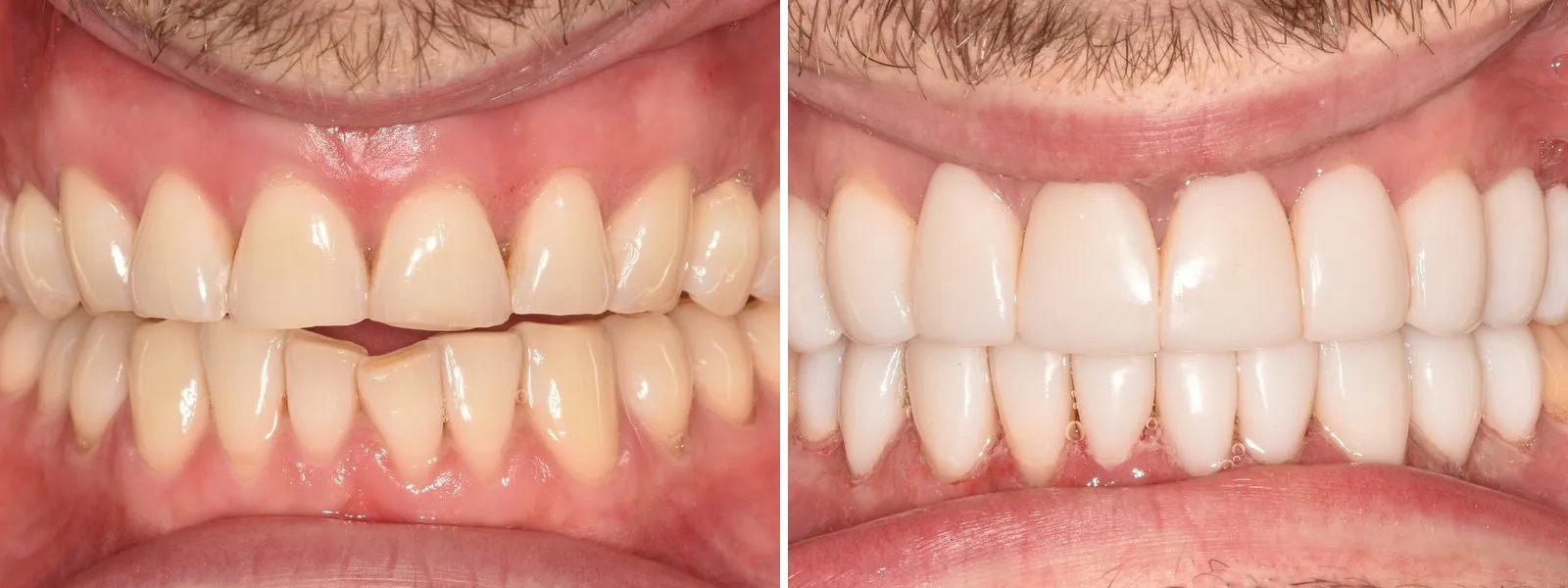
Composite veneers at Radiant Dental: before (left) and after (right). Photographs shared with the patient’s consent. Individual results vary.
How do you look after composite bonding?
- Brush twice a day with a fluoride toothpaste and clean between your teeth daily. Bonding does not decay itself, but the tooth around it can.
- Go easy on dark drinks and strongly coloured food for the first day or two, and rinse with water after coffee, tea and red wine.
- Do not use your front teeth as tools. Cut apples and crusty bread rather than biting into them, and keep pens and nails out of your mouth.
- Avoid abrasive whitening toothpastes, which can dull the polish.
- Wear a night guard if you grind. It is the single best protection.
- Keep your hygiene appointments. A polish removes surface stain and smooths the edges of the bonding.
- Tell us about a chip early. A small chip is a quick repair. A large one may mean rebuilding the tooth.
Composite bonding vs porcelain veneers
| Composite bonding | Porcelain veneers | |
|---|---|---|
| Cost at Radiant Dental | From £250 to £300 per tooth | From £800 per tooth |
| Enamel removed | Little or none | A layer, permanently |
| Appointments | Usually one | More than one, as they are made in a lab |
| How long it lasts | Typically 4 to 7 years | Typically longer |
| Resistance to staining | Lower, can stain and dull | Higher |
| Repairs | Usually fixed directly on the tooth | Often replaced |
| Changing your mind | Easier to adjust or replace, though full removal is hard | Not possible, as the enamel is gone |
Our view: for most people trying cosmetic work for the first time, composite is the sensible place to start, because it commits you to less. Some patients later move to porcelain once they know exactly what they like. The reverse does not work, as enamel that has been removed does not grow back.
If porcelain would serve you better, we will tell you at the consultation. The full range of cosmetic options is on our composite bonding and veneers page.
Should you whiten, straighten or bond first?
Whiten first, straighten second, bond last. The order matters for three reasons.
- Composite does not whiten. Whitening gel works on natural enamel only. If you bond first and whiten later, the bonding stays the old shade while your teeth lighten around it.
- Moving teeth changes the space you are bonding into. Straightening with Invisalign® first means the bonding is shaped for the final position of your teeth, not the starting one.
- Invisalign® uses composite too. Most aligner cases need small tooth-coloured attachments, which are polished away at the end. Any cosmetic bonding is planned for after that.
Every Invisalign® course at Radiant Dental includes free whitening (worth £330), so the whole sequence can run as one plan. Our guide to how Invisalign® works covers the straightening side.
Who is composite bonding not right for?
Bonding is not the right first step if:
- You have untreated decay or gum disease. These come first. There is no sense building onto a tooth that is not healthy.
- You grind your teeth and have not addressed it. The bonding will chip. A night guard comes first, or alongside.
- Your teeth are significantly crowded or crooked. Bonding can disguise a small amount, but straightening gives a better and more durable result.
- The damage is extensive. A badly broken or heavily filled tooth may need a crown or porcelain instead.
- Mainly you want whiter teeth. That is a job for whitening, with bonding added afterwards if you still want it.
- You want smaller teeth. Bonding adds. It cannot take size away.
If your case falls into one of these, we will say so and explain what we would recommend instead.
What to ask any dentist before you book composite bonding
Whoever you choose, a good practice will be happy to answer these:
- Will you examine my teeth, gums and bite, and take X-rays, before agreeing a plan?
- Can I see before-and-after photographs of cases you have treated? Your own work, not stock images.
- Is bonding the right treatment for me, or should something come first?
- What is the total cost, what would a repair cost, and what does any guarantee cover?
- Who looks after it if it chips, and who provides my aftercare?
- Is the dentist registered with the General Dental Council? You can check in a minute on the GDC register.
Can you get composite bonding on the NHS?
Bonding done purely to change how healthy teeth look is generally private treatment in the UK. The NHS can treat a chipped tooth where it is clinically necessary, and its guidance on a chipped, broken or cracked tooth lists fillings among the options. Radiant Dental is a fully private practice, so all of our bonding is private, priced up front and agreed in writing.
Composite bonding at Radiant Dental
We are at 61 Stamford Square, Ashton-under-Lyne, OL6 6QR, with free parking at the rear of the building off St James Street. Patients come to us from across Tameside, including Stalybridge, Droylsden, Dukinfield, Hyde, Mossley and Denton. Our dentists include Dr Morvin Patel (BDS MFDS, PGCert Aesthetic & Restorative Dentistry) and Dr Oliver King.
What you can expect:
- Published prices. Every figure in this guide is the same as on our fees page. No surprises at the end.
- A plan before treatment. A full examination first, then a written plan and price you can take away and think about.
- Real cases. Our composite bonding page shows five before-and-after cases from this practice, with a slider so you can compare each one properly.
- Care for nervous patients. We were a national finalist for the care of nervous patients at the Private Dentistry Awards 2023. You can pause treatment at any time.
If you have been thinking about bonding, the first step is a consultation. Book online, call 0161 330 1178, or message us on WhatsApp, and we will talk through what is possible for your teeth.