

Invisalign® explained: how clear aligners work and how to wear them
How Invisalign® works step by step, what it can and cannot fix, how to clean and wear your aligners, and what it costs in Ashton-under-Lyne.
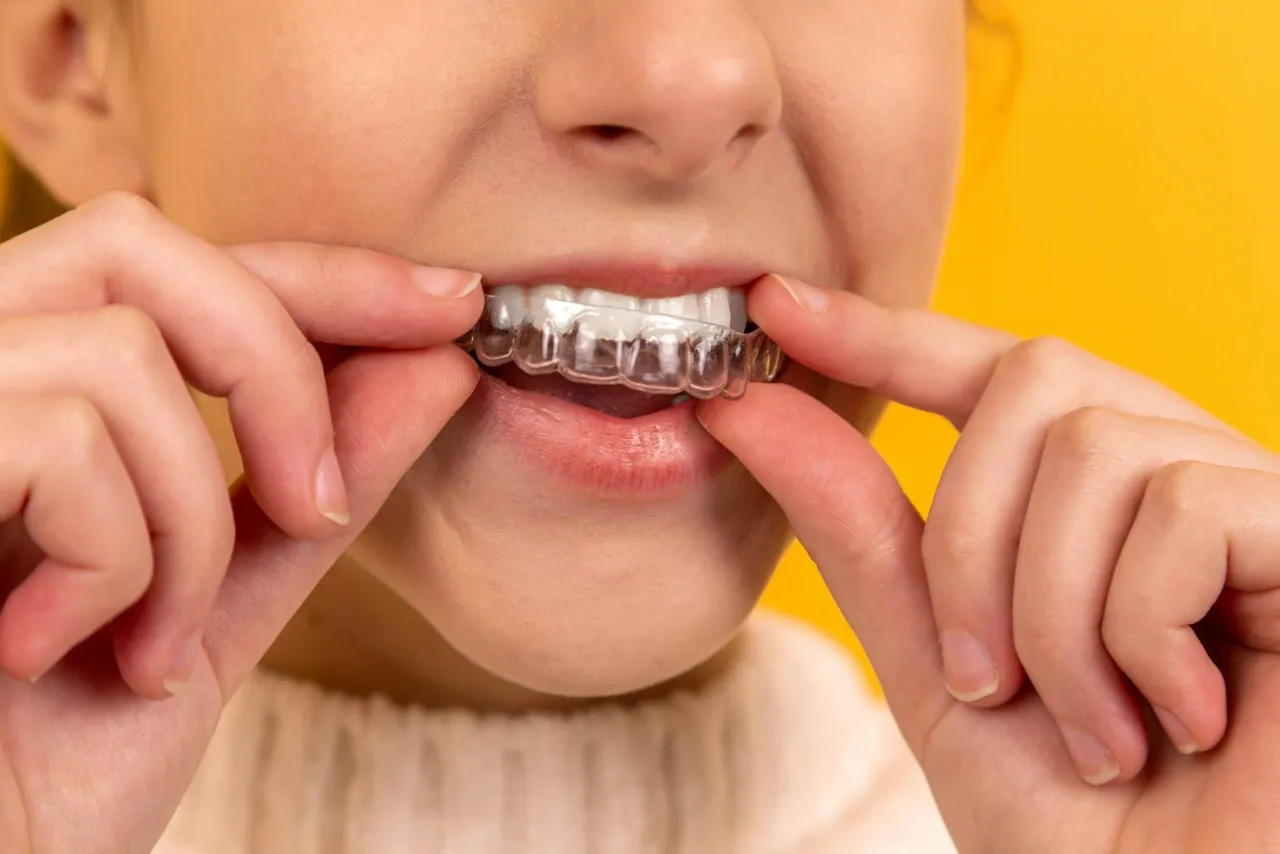
Invisalign® is a course of clear, removable plastic aligners that move your teeth a fraction of a millimetre at a time. You wear each set for one to two weeks, 20 to 22 hours a day, taking them out only to eat, drink anything other than water, and brush. Most cases at our Ashton-under-Lyne practice take 6 to 18 months, and start from £2,500.
That is the short version. Below is what actually happens, what the treatment can and cannot do, and — the part people underestimate — how to look after the aligners so treatment finishes on time.
What Invisalign® actually is
Invisalign® is a brand of clear aligner therapy. Instead of brackets glued to your teeth and a wire tightened every few weeks, you get a numbered series of transparent trays, each moulded from a 3D scan of your own mouth.
Every tray in the series is very slightly different from the one before. Worn in order, they apply gentle, continuous pressure that walks each tooth along a planned path. The teeth do not simply get pushed — the bone around each root remodels as the tooth moves, which is why the process takes months rather than weeks, and why consistency matters more than force.
The practical differences from fixed braces:
- They come out. You remove them to eat, so there are no food restrictions and no learning to floss around a wire.
- They are hard to spot. Most people do not notice them in conversation.
- Fewer appointments. You change trays yourself at home and see us every 6 to 8 weeks for a check rather than for a monthly adjustment.
- The plan exists before treatment starts. The full sequence of movements is designed and approved up front, which is what makes the projected timeline possible.
The trade-off is honest: aligners only work while they are in your mouth. Fixed braces work whether you are committed or not. With Invisalign®, the discipline is yours.
How treatment works, step by step
1. Consultation and scan
Your first visit is an assessment — we check the health of your teeth and gums before discussing movement, because there is no sense straightening a tooth with active decay or untreated gum disease underneath.
If you are suitable, we scan your mouth with our iTero digital scanner. It is a handheld camera, not a tray of impression material, so there is nothing to gag on. The scan takes a few minutes.
2. Seeing the result before you commit
This is the part most people find persuasive. The scan produces a simulation of your projected final position, alongside your teeth as they are today. You see the outcome, the number of aligners and the estimated timeline before you agree to anything — and you get the plan and the price in writing.
If you do not like what the projection shows, nothing has been started and nothing has been spent beyond the consultation.
3. Attachments
Most cases need attachments — small, tooth-coloured composite bumps bonded to certain teeth. They give the aligner something to grip so it can rotate or upright a tooth rather than just tipping it.
They are placed without drilling and removed and polished away at the end. They are the reason aligners can achieve movements that would otherwise need a bracket.
4. Wearing the series
You collect several aligners at a time and change to the next set every one to two weeks at home. Expect firm pressure and some tenderness for the first two or three days of each new tray — that is the tooth moving, and it fades. Changing at bedtime means you sleep through the tightest part.
5. Refinement
It is common, and not a failure, to finish the main series and need a short second set of refinement aligners to perfect a few positions. We plan for this. Teeth are biological, and they do not all move exactly as predicted.
6. Retention
Once the teeth are where you want them, retainers hold them there. More on this below, because it is the step people most often regret skipping.
What Invisalign® can and cannot fix
It handles well:
- Crowding and overlapping front teeth
- Gaps and spacing
- Mild to moderate overbite, underbite and crossbite
- Teeth that have drifted after previous orthodontic work
It is a poor fit for:
- Large vertical movements, where a tooth needs to be pulled down or pushed up significantly
- Severe rotations, particularly of round-rooted teeth like premolars
- Skeletal bite problems, where the jaws themselves are mismatched — that is a surgical or growth-related question, not an aligner one
One thing worth being clear about: Invisalign® changes position, not colour or shape. Straight teeth that are stained will be straight and stained. That is why whitening is included with every course here, and why bonding — if you want it — is planned for after the teeth have moved, not before.
If your case falls into the second list, we will say so at the scan and talk you through what else would work — the same lists, with what we would recommend instead, are on our Invisalign® treatment page.
Looking after your aligners
This section matters more than any other. Treatment running over its projected finish date is almost always a wear-time problem, not a planning one.
The 20 to 22 hour rule
Aligners need to be in for 20 to 22 hours a day. That leaves roughly two hours for all your meals, drinks and brushing combined — which is less slack than most people assume when they first hear it.
Falling to 16 or 18 hours a day does not simply slow things down proportionally. Teeth begin drifting back between wears, so you lose ground as well as time, and the next aligner stops fitting properly. If an aligner suddenly feels tight or will not seat, under-wear is usually the reason.
Take them out to eat. Always.
Chewing with aligners in cracks them and traps food against the tooth surface, which is a fast route to decay. Take them out for every meal and every snack.
Water only, while they are in
Nothing but plain water should go in with the aligners in place:
- Hot drinks warp the plastic, which permanently ruins the fit of that tray.
- Coffee, tea, red wine, cola and turmeric stain it, and a stained aligner is far more visible than a clear one.
- Sugary and acidic drinks pool against the enamel under the tray instead of being washed away by saliva. That is how people finish straightening with white-spot decay marks on newly straight teeth.
Take them out, drink, rinse your mouth with water, and put them back.
Cleaning the aligners
- Rinse them under cool water every time they come out, before the saliva dries on them.
- Brush them gently with a soft brush and clear antibacterial soap, or a dedicated aligner cleaner.
- Do not use toothpaste. It is mildly abrasive and scratches the plastic; the microscopic scratches then hold stain and make the tray look cloudy.
- Never use hot water, boiling water or a dishwasher — heat deforms them.
- Soak once a day in a cleaning solution if you use one, then rinse thoroughly.
Cleaning your teeth
Brush and floss before the aligners go back in. Sealing plaque against the enamel for 22 hours is exactly the situation you want to avoid. A travel brush and a small tube of toothpaste in your bag makes this realistic when you are eating out.
Storage, travel and losses
Put them in their case every single time. Aligners wrapped in a napkin get thrown away — it is the most common way people lose them. Dogs are the second.
When travelling, carry your current aligner, the previous one and the next one. If the current tray is lost, the previous one holds the position until we can help. Never skip ahead to the next set without asking us: it is the fastest way to turn a small problem into a stalled treatment.
Retainers, and why relapse happens
Teeth are not set in concrete. They sit in bone, held by elastic fibres that retain a memory of where they used to be. Left alone after treatment, they drift back — sometimes within months.
Retainers are permanent, not a formality. Nightly wear, indefinitely. Every Invisalign® course at Radiant Dental includes six free Vivera® retainers (worth £450) for exactly this reason.
Relapse after abandoning retainers is not covered by the original fee, and re-treatment costs the same as treatment. Wearing a retainer at night is the cheapest part of the whole process.
What Invisalign® costs in Ashton-under-Lyne
Our published prices, the same figures on our fees page:
| Treatment | Price |
|---|---|
| Invisalign® Express (up to 7 aligners, top & bottom) | From £2,500 |
| Invisalign® Go (up to 20 aligners, top & bottom) | From £3,500 |
| Vivera® retainers (3 top + 3 bottom) | From £450 |
Every course includes free whitening worth £330 and six free Vivera® retainers worth £450.
What that covers, which option suits you, and how the six stages of treatment work — including the attachments most cases need and the refinement set that is often required at the end — is set out on our Invisalign® treatment page.
Nobody else advertising for “dentist in Ashton-under-Lyne” publishes a full price list, and we think that is the wrong way round — you should be able to work out roughly what something costs before you pick up the phone.
0% APR finance through Chrysalis spreads the cost over 12 to 60 months, subject to status. A £2,500 Express case over 24 months is a little over £100 a month.
Your consultation is £65, which includes the full examination, X-rays and a written treatment plan.
Is it right for you?
Invisalign® suits you if your teeth are healthy, your gums are stable, your case is mild to moderate, and you are honest with yourself about wearing the trays 22 hours a day. It suits you less if you know you will not.
We will tell you if fixed braces would give you a better result. Selling someone the treatment they want rather than the one that works is how practices end up with straight teeth and unhappy patients.
If you have been thinking about it, book a consultation and see the projection first. It costs £65 and commits you to nothing.